Choosing the Right Digital Asset Platform
Choosing the Right Digital Asset Platform If your files are spread across email threads, shared drives, desktops, and chat apps, you do not just have a storage problem. You have an efficiency problem. For solo founders, small businesses, startups, and growing teams, managing documents, images, and shared files gets messy fast. People waste time hunting for the latest version, re-uploading files they already have, or wondering who still has access to a sensitive link. That is exactly where a di
 Kevin SimphiweJuly 2, 20269 min read
Choosing the Right Digital Asset Platform
If your files are spread across email threads, shared drives, desktops, and chat apps, you do not just have a storage problem. You have an efficiency problem.
For solo founders, small businesses, startups, and growing teams, managing documents, images, and shared files gets messy fast. People waste time hunting for the latest version, re-uploading files they already have, or wondering who still has access to a sensitive link. That is exactly where a digital asset platform becomes valuable.
A good platform gives your team one reliable place to store, organize, preview, share, and control files without the cost or complexity of enterprise-heavy systems. And if you are evaluating options, the goal is not just to buy more storage. It is to choose a system that makes daily work easier.
What a Digital Asset Platform Actually Does
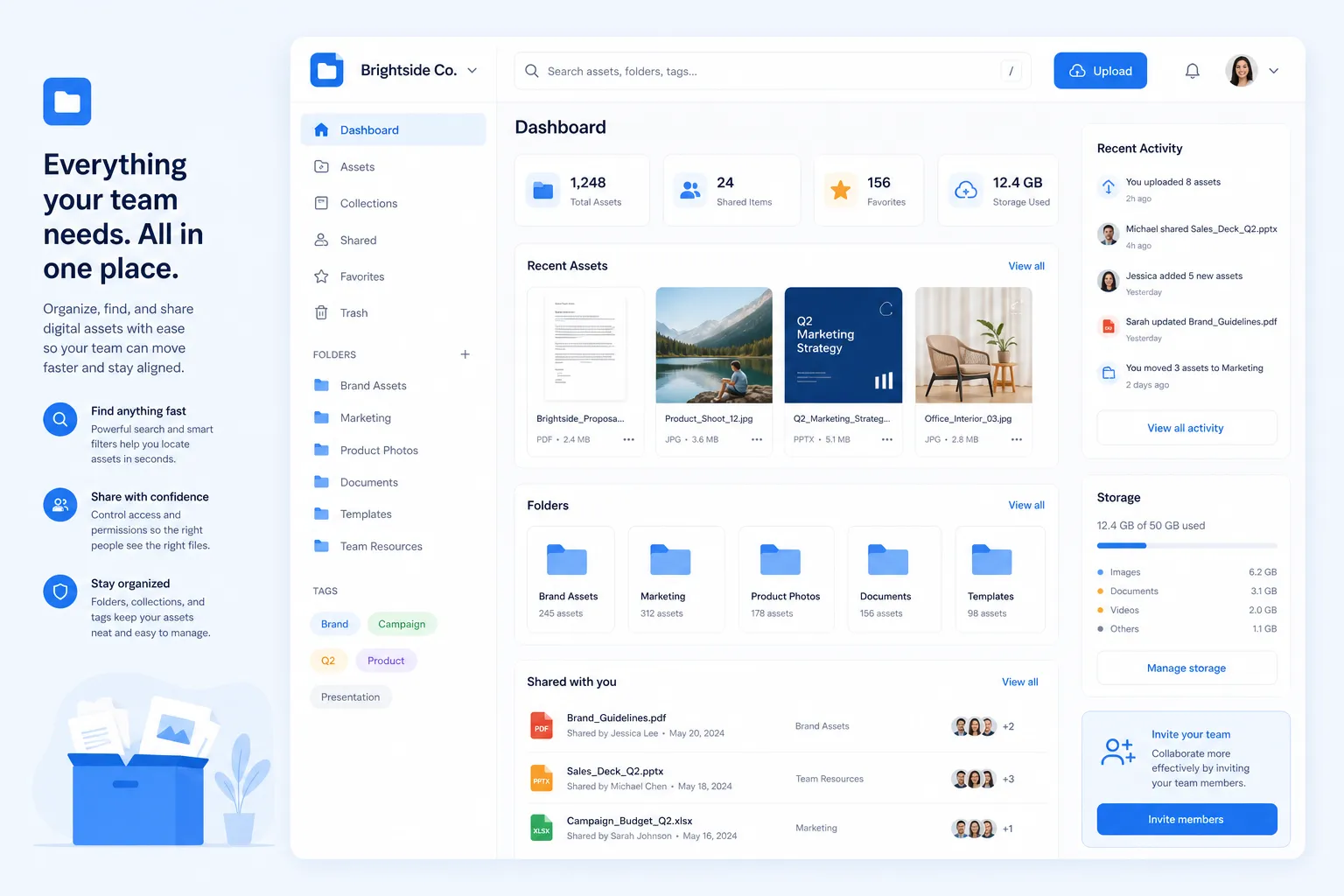
A digital asset platform is software that helps businesses store, organize, manage, and share digital files from one central place. Those files can include:
- Documents
- Images
- Brand files
- PDFs
- Creative assets
- Sales collateral
- Internal resources
- Client deliverables
The best platforms do more than hold files. They make those files usable.
That means your team can:
- Find files quickly with a clear folder structure
- Preview images without downloading them
- Share files securely with the right people
- Control access by user or team
- Keep assets organized as the business grows
- Reduce confusion around outdated or duplicate files
This is where many businesses outgrow basic cloud drives. Generic storage tools can hold files, but they often fall short when you need better visibility, cleaner organization, stronger sharing controls, and smoother collaboration.
Why Businesses Use a Digital Asset Platform
Most teams do not start by searching for a DAM. They start by feeling pain.
That pain often looks like this:
Problem | What it causes |
|---|---|
Files scattered across tools | Lost time and duplicate work |
No clear folder structure | Slow onboarding and messy workflows |
Uncontrolled file sharing | Security and access risks |
No image previews or asset context | Friction for creative and marketing teams |
Old versions still circulating | Brand inconsistency and mistakes |
Growing team, same manual processes | Bottlenecks and confusion |
A digital asset platform solves these practical problems by creating a single source of truth.
"Approximately 33.4% of marketers spend around three weeks per year searching for images, videos, and other digital files." - Canto
That number explains why file organization is no longer a back-office issue. It directly affects productivity, speed, and team confidence.
The Core Difference Between File Storage and Real Asset Management
A lot of software claims to help with files. Not all of it is built for asset management.
Here is the simplest way to think about it:
Tool type | Primary purpose | Best for |
|---|---|---|
Basic cloud storage | Save and sync files | Personal storage and simple backup |
Shared drive tools | Team access to folders | Lightweight collaboration |
Enterprise DAM suites | Complex content operations | Large global brands with advanced workflows |
Simple digital asset platform | Organized storage, secure sharing, team collaboration | Startups, small businesses, and growing teams |
The sweet spot for many businesses is not a bloated enterprise suite. It is a simpler platform that gives you control without forcing you to manage features you will never use.
That is one reason AssetHQ stands out. It is designed for teams that need professional file management without technical overhead: intuitive organization, fast uploads, image previews, secure sharing, and scalable collaboration in one clean system.
The Features That Matter Most When Choosing a Platform
Competitor content often lists features, but many articles stop at surface-level descriptions. The real question is not whether a feature exists. It is whether it makes work easier every day.
Organization That Makes Sense Immediately
A platform should feel clear from day one.
If your team needs training just to understand where files belong, the system is already creating drag. Look for:
- Intuitive folder-based organization
- Logical nesting for clients, projects, departments, or campaigns
- Clear file naming visibility
- Easy movement of files between folders
- Consistent structure that can scale over time
For many growing teams, this matters more than flashy automation. Simplicity is not a compromise. It is a productivity feature.
Secure File Sharing Without Extra Friction
Sharing is one of the biggest reasons businesses adopt a better platform. But convenience without control is risky.
Look for:
- Shareable links
- Expiring links
- Access permissions
- Private folders
- User-level controls
- Protection against oversharing
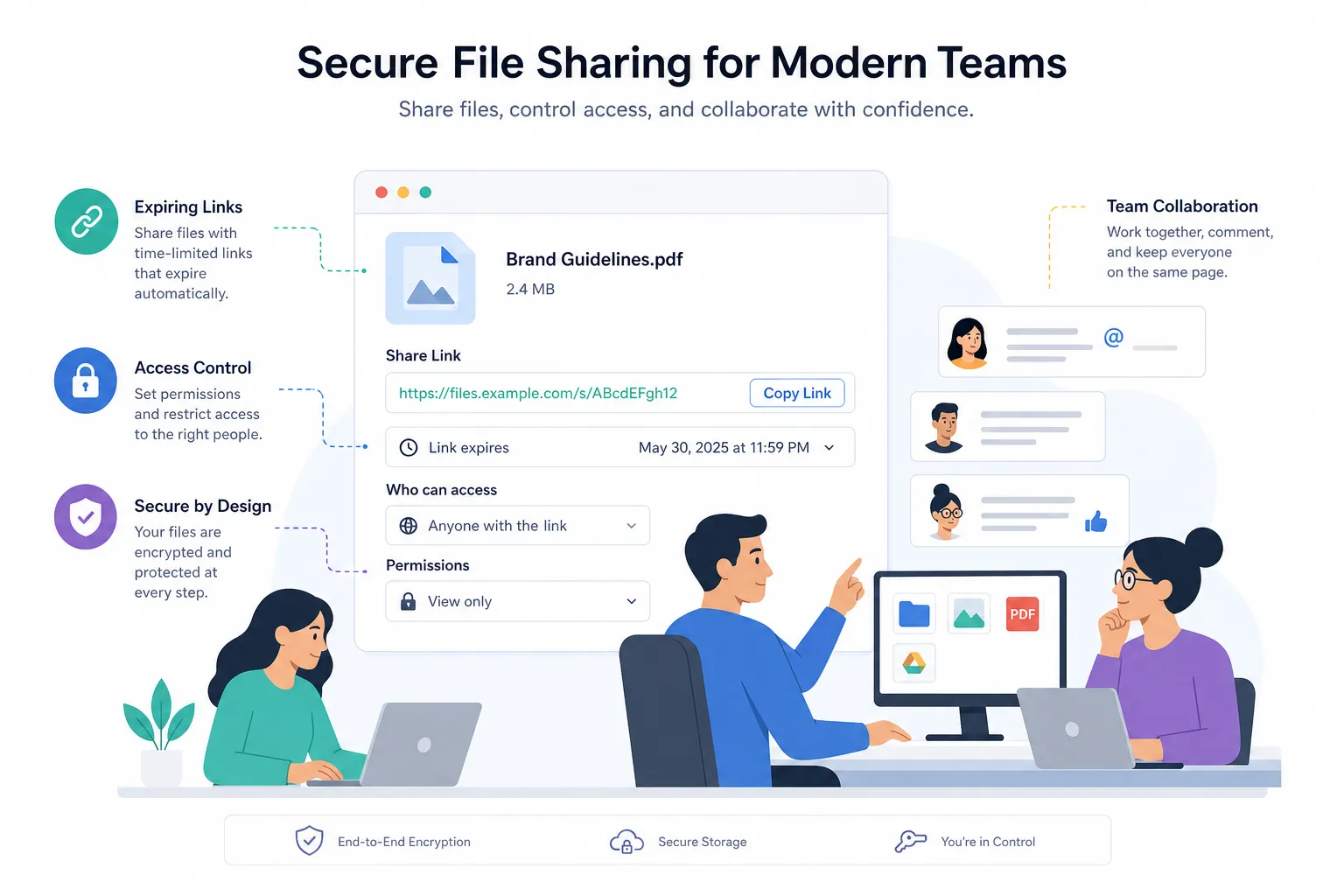
This is especially important for agencies, consultants, startups, and operations teams sharing files with contractors, clients, or external partners. AssetHQ’s secure file sharing with expiring links and access control fits this need naturally. You get the flexibility to share fast without giving up control.
Image Preview and Visual File Management
Many businesses manage more than documents. They also manage product images, social graphics, design files, brand visuals, and marketing assets.
When your platform supports image preview and visual browsing, it becomes much easier to:
- Find the right image quickly
- Review assets before downloading
- Reduce wrong-file errors
- Keep creative workflows moving
This is one of those features that sounds small until your team uses it every day. Then it becomes essential.
Collaboration for Real Teams, Not Just Storage Users
A useful platform should support how teams actually work together.
That includes:
- Shared access across departments
- Clear permissions by role
- Fast retrieval of common files
- Easy onboarding for new users
- Central storage that reduces duplicate requests
The goal is not just storing assets. It is reducing interruptions.
A founder should not be the only person who knows where files live. A marketing lead should not need to resend the same logo pack every week. A sales rep should not be guessing which PDF is current.
Speed and Ease of Use
This is the biggest content gap in many competitor articles: they talk about power, but not about friction.
A platform only works if people actually use it.
Prioritize:
- Fast upload speeds
- Quick file access
- Minimal clicks to share or find something
- Clean interface
- Easy setup
For smaller and mid-sized organizations, usability is often more valuable than deep customization. AssetHQ’s appeal is that it is simple enough for solo users and powerful enough for teams, without becoming another complicated tool to administer.
Security and Reliability
Security should not be reserved for enterprises.
Any business storing contracts, brand files, financial documents, customer assets, or internal content needs dependable protection. Look for:
- Enterprise-grade secure storage
- Access controls
- Permission management
- Reliable cloud infrastructure
- Safe external sharing options
If you are comparing vendors, ask whether security is built into the product or locked behind higher pricing tiers.
Scalability Without Pricing Surprises
A platform should work now and still work later.
That means it should support:
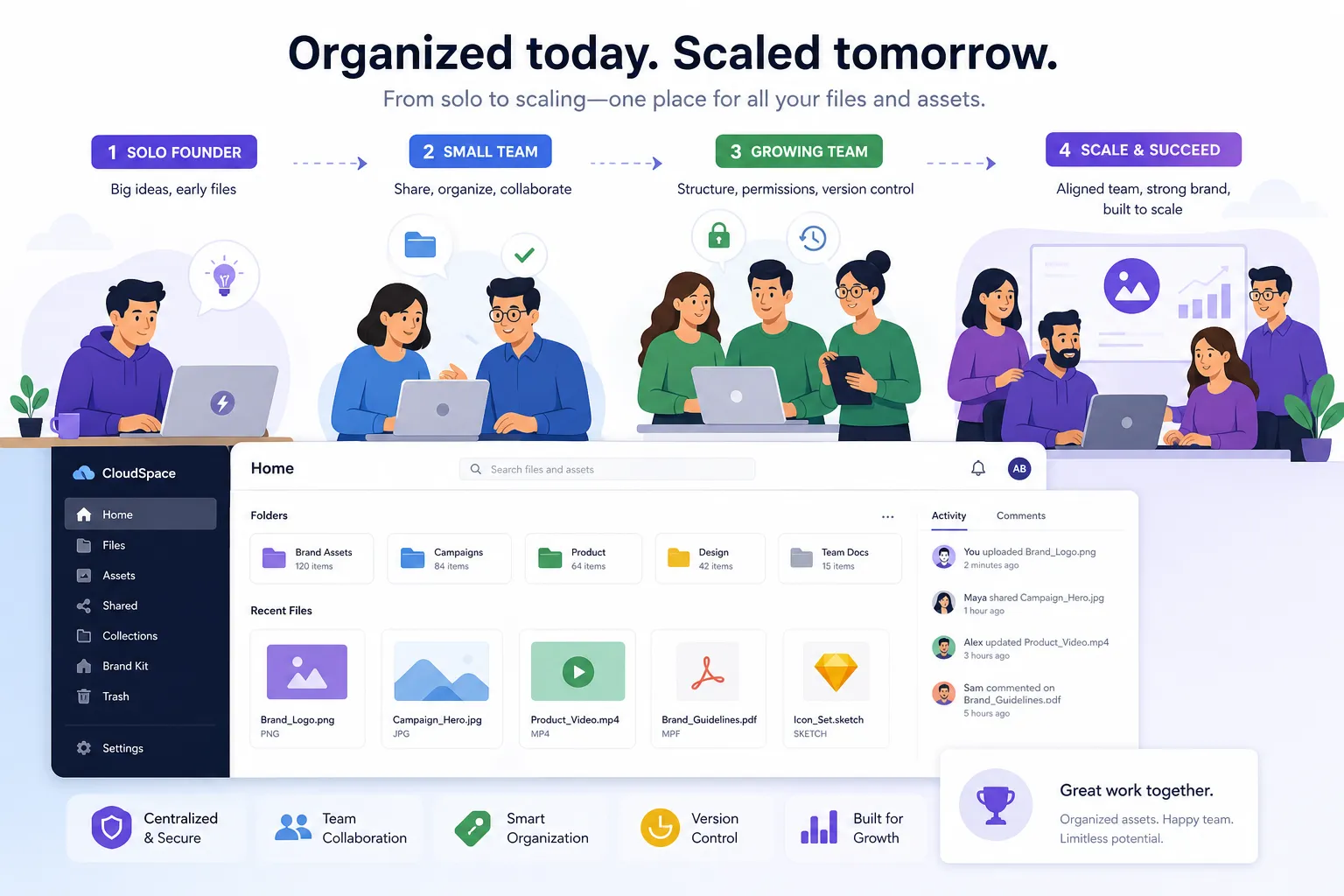
- A solo founder today
- A five-person team next quarter
- A larger multi-team setup next year
But scalability is not just technical. It is financial too.
One of the most overlooked buying factors is pricing clarity. Many businesses get trapped in tools that look affordable at first, then become expensive through seat limits, add-ons, or hidden storage costs.
AssetHQ’s affordable flat pricing and straightforward model are strong advantages here. Teams can plan with confidence instead of worrying that collaboration will become more expensive every time they grow.
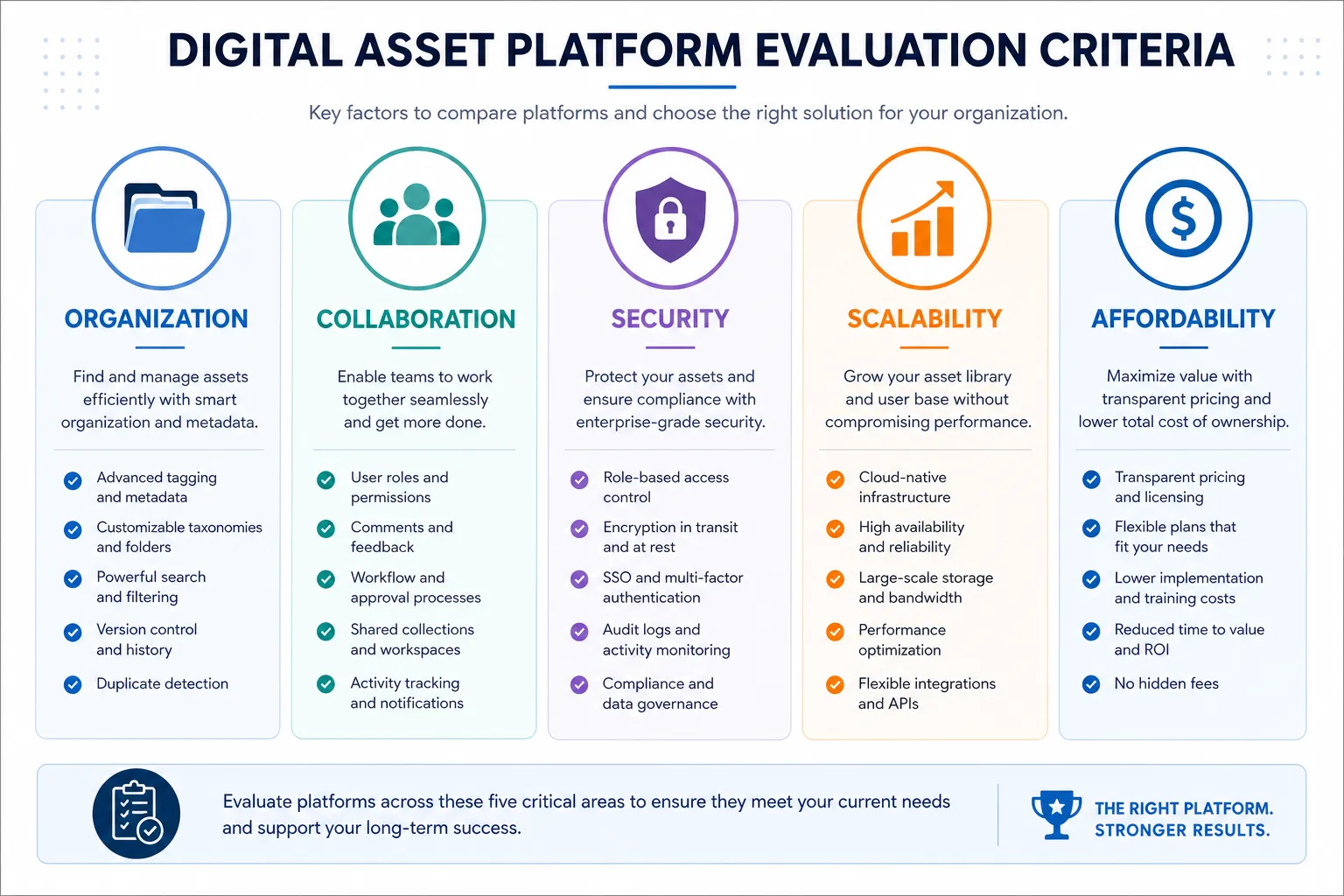
A Simple Framework for Evaluating Your Options
Instead of getting distracted by feature lists, use this practical scorecard.
Evaluation area | Questions to ask |
|---|---|
Organization | Can our team understand the structure instantly? |
Search and access | How quickly can users find what they need? |
Sharing | Can we control who sees what, and for how long? |
Collaboration | Does it reduce back-and-forth between team members? |
Visual management | Can we preview and manage image-heavy content easily? |
Security | Are permissions and storage protections strong enough? |
Scalability | Will it still fit when our team and file library grow? |
Pricing | Is the cost clear, predictable, and fair? |
If a product scores well across these categories and still feels easy to use, you are likely looking at the right fit.
What Competitor Platforms Get Right, and Where Teams Still Struggle
Many leading vendors position themselves around enterprise DAM, advanced AI, or large-scale content operations. Those solutions can be powerful, but they are not always right for smaller organizations.
Bynder
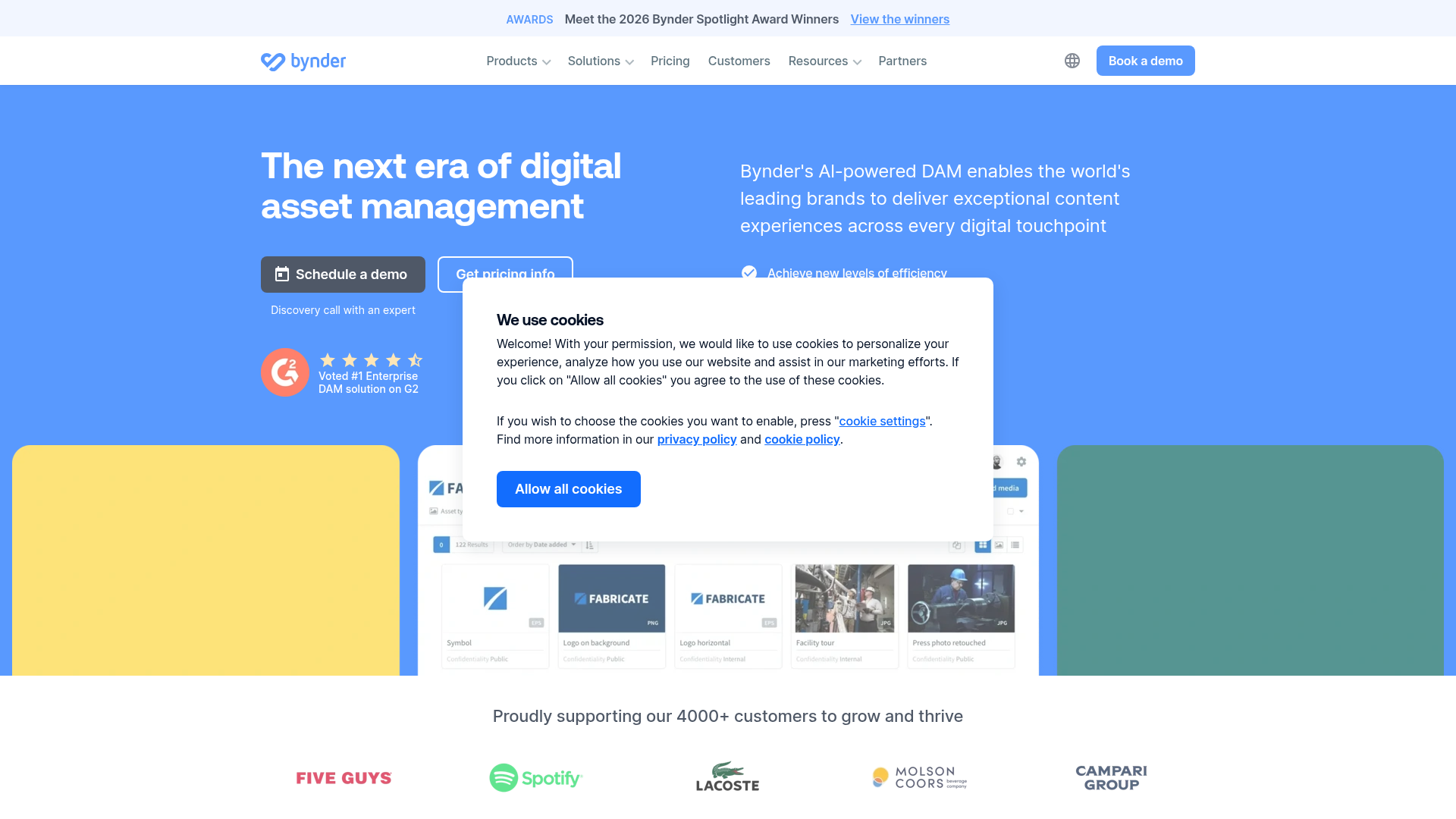
Bynder emphasizes centralized asset management, workflow, brand governance, and AI-enhanced discovery. It is well-suited to larger organizations with complex brand operations.
Where some teams hesitate is complexity. If your main need is dependable organization, image management, secure sharing, and simple collaboration, a heavyweight system may feel like more platform than you need.
MediaValet
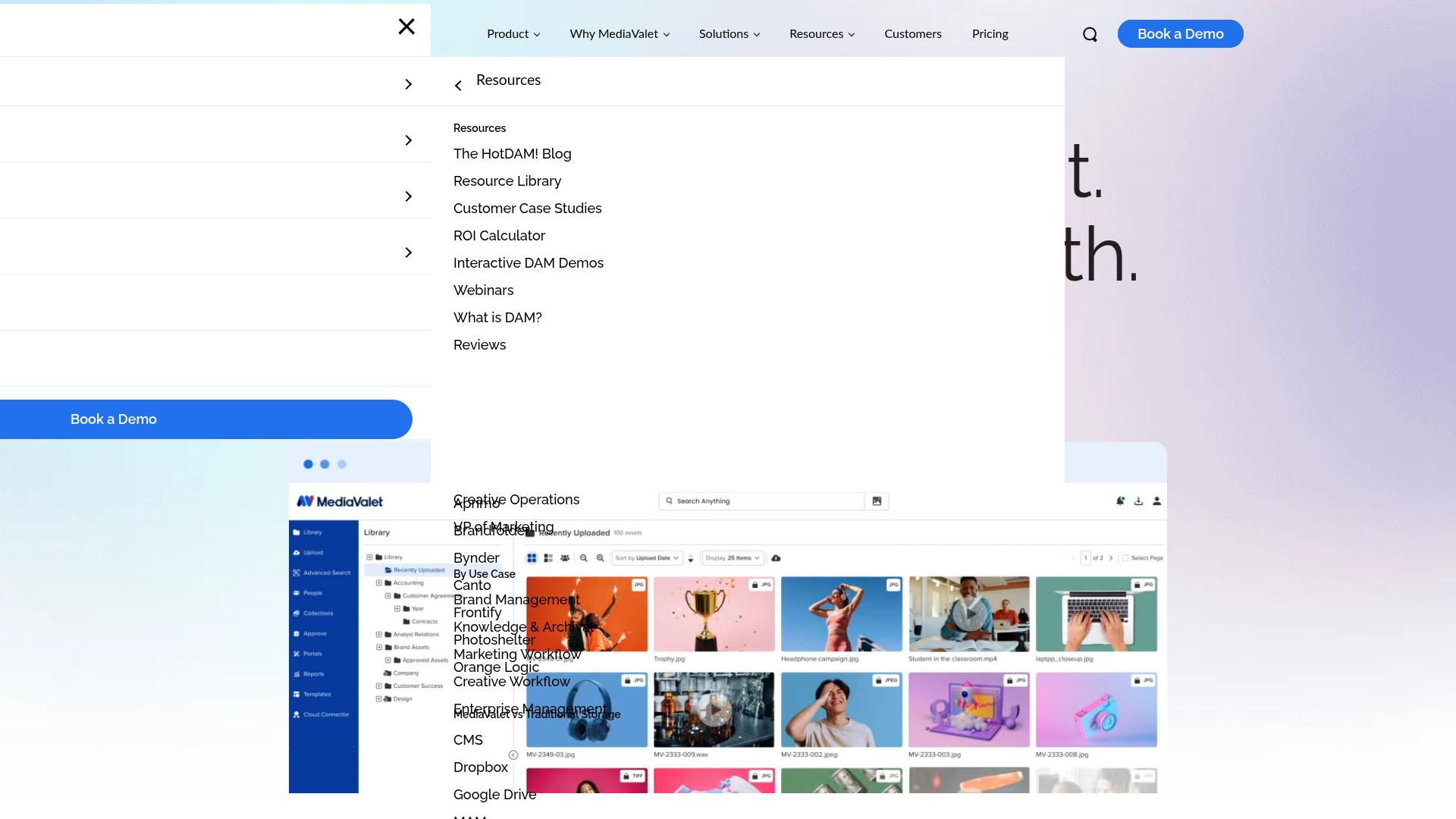
MediaValet highlights enterprise scalability, video workflows, AI tagging, and rich collaboration features. It is often presented as a fit for content-heavy teams and large media libraries.
For smaller teams, the challenge can be matching cost and complexity to actual needs. Not every business needs a feature-rich media operation. Many just need a cleaner, faster way to manage everyday assets.
Hyland
Hyland focuses heavily on enterprise content ecosystems, governance, compliance, and integration. It is a strong conversation for organizations with advanced operational and regulatory requirements.
But that is exactly the point: many startups and growing companies are not looking for a full content-services ecosystem. They are looking for dependable digital asset management that is easy to adopt.
The Missing Buying Advice Most Articles Leave Out
Many ranking articles explain what DAM is and list common features. Fewer explain the practical buying mistakes that lead to poor adoption.
Do Not Buy for a Future You May Never Become
It is smart to think ahead. It is not smart to overbuy.
If your team is small and your workflows are straightforward, choose a platform that solves today’s problems well and can grow with you. Do not assume you need an enterprise feature stack because large brands use one.
Measure the Cost of Complexity
Every extra layer of software complexity creates hidden costs:
- Slower onboarding
- Poor adoption
- More admin work
- More support requests
- More workarounds outside the system
Simple systems often outperform complex ones because teams actually use them correctly.
Prioritize Daily Workflow Over Impressive Demos
A polished demo can be misleading. Ask how the product performs in ordinary tasks:
- Uploading a batch of files
- Sharing a folder with a client
- Locking down sensitive content
- Finding an image in seconds
- Giving a new teammate access
That is where real value lives.
Why the Market Keeps Growing
The demand for better asset management keeps rising because businesses are creating and sharing more content across more channels than ever before.
"The market was valued at approximately USD 4.2 billion in 2023 and is expected to reach USD 11.9 billion by 2030." - Grand View Research
The growth is not just about enterprise transformation. It reflects a broader shift: even smaller teams now handle enough digital content to need more structure, security, and control.
How AssetHQ Fits the Modern Buyer
AssetHQ is especially compelling for businesses that want the benefits of professional digital asset management without the usual bloat.
It fits naturally when you need:
- Simple and intuitive file management
- Organized storage for documents, images, and files
- Secure sharing with expiring links and access controls
- Image preview support for faster visual browsing
- Team collaboration features for growing organizations
- Enterprise-grade secure storage
- Fast uploads and easy file access
- Affordable flat pricing with no hidden fees
- A scalable system for solo users and teams alike
That combination matters because many businesses are caught in the middle. They have outgrown loose file storage, but they do not want to pay for an oversized DAM they will only partially use.
AssetHQ gives those teams a cleaner path.
A Quick Self-Assessment Before You Decide
If you answer yes to several of these, you are ready for a better platform:
- Are files hard to find across your current tools?
- Do team members keep asking for the same assets?
- Are you sharing sensitive files without enough control?
- Do you manage both documents and images regularly?
- Is your current setup fine for storage but poor for collaboration?
- Are you growing and need a more reliable system before chaos gets worse?
- Do you want predictable pricing instead of piecing together add-ons?
If so, the right digital asset platform can save time immediately and reduce a surprising amount of daily friction.
What the Best Choice Usually Looks Like
The right platform is rarely the one with the most features.
It is the one your team can adopt quickly, trust daily, and grow with comfortably.
For most solo operators, startups, and growing teams, the ideal choice is a platform that balances:
- Ease of use
- Strong organization
- Secure sharing
- Team-friendly collaboration
- Visual asset support
- Dependable security
- Clear, scalable pricing
Final Verdict
Choosing the right digital asset platform is not really about buying software. It is about removing friction from how your business stores, finds, shares, and protects important files.
If you want a system that feels intuitive, supports both documents and images, keeps sharing secure, works well for teams, and avoids the cost and complexity of enterprise-heavy DAM tools, AssetHQ is a smart fit.
It gives you the structure of a serious asset management system with the simplicity growing organizations actually need.
If your current file setup feels messy, slow, or risky, this is the right time to simplify it. Try AssetHQ and give your team one secure, organized home for every important file.
Related Posts

Brand Asset Management Software for Growing Teams
Discover brand asset management software for growing teams and learn how to organize files, share securely, and scale with ease.
min read
Cloud Based Digital Asset Management Benefits
Explore cloud based digital asset management benefits for secure file sharing, simpler teamwork, and organized growth. Try it today now
min read
File Sharing and Storage Made Simple for Teams
Discover file sharing and storage made simple for teams with secure access, better organization, and faster collaboration. Try AssetHQ!
min read