Enterprise Digital Asset Management Software
Enterprise Digital Asset Management Software Enterprise digital asset management software helps large organizations store, organize, govern, and distribute digital content from one controlled system. If your team is juggling thousands of images, documents, videos, sales files, brand assets, and product content across shared drives, email threads, and disconnected tools, the problem is not just storage. It is speed, consistency, compliance, and control. For enterprises, a digital asset manageme
Enterprise Digital Asset Management Software
Enterprise digital asset management software helps large organizations store, organize, govern, and distribute digital content from one controlled system. If your team is juggling thousands of images, documents, videos, sales files, brand assets, and product content across shared drives, email threads, and disconnected tools, the problem is not just storage. It is speed, consistency, compliance, and control.
For enterprises, a digital asset management platform is the operational layer that keeps content usable across departments, regions, agencies, and channels. But for many businesses, the challenge is that traditional enterprise platforms can become bloated, expensive, and hard to use.
That is where the conversation gets more practical. The best enterprise digital asset management system is not simply the one with the longest feature list. It is the one that helps teams find files fast, share them securely, manage permissions clearly, and scale without creating unnecessary complexity.
AssetHQ takes that principle seriously. It gives businesses a simple, dependable way to manage digital assets, documents, images, and shared files with intuitive organization, secure access controls, fast file retrieval, and affordable flat pricing. For growing teams that want enterprise-grade reliability without enterprise-heavy friction, that matters.
What Enterprise Digital Asset Management Software Really Means
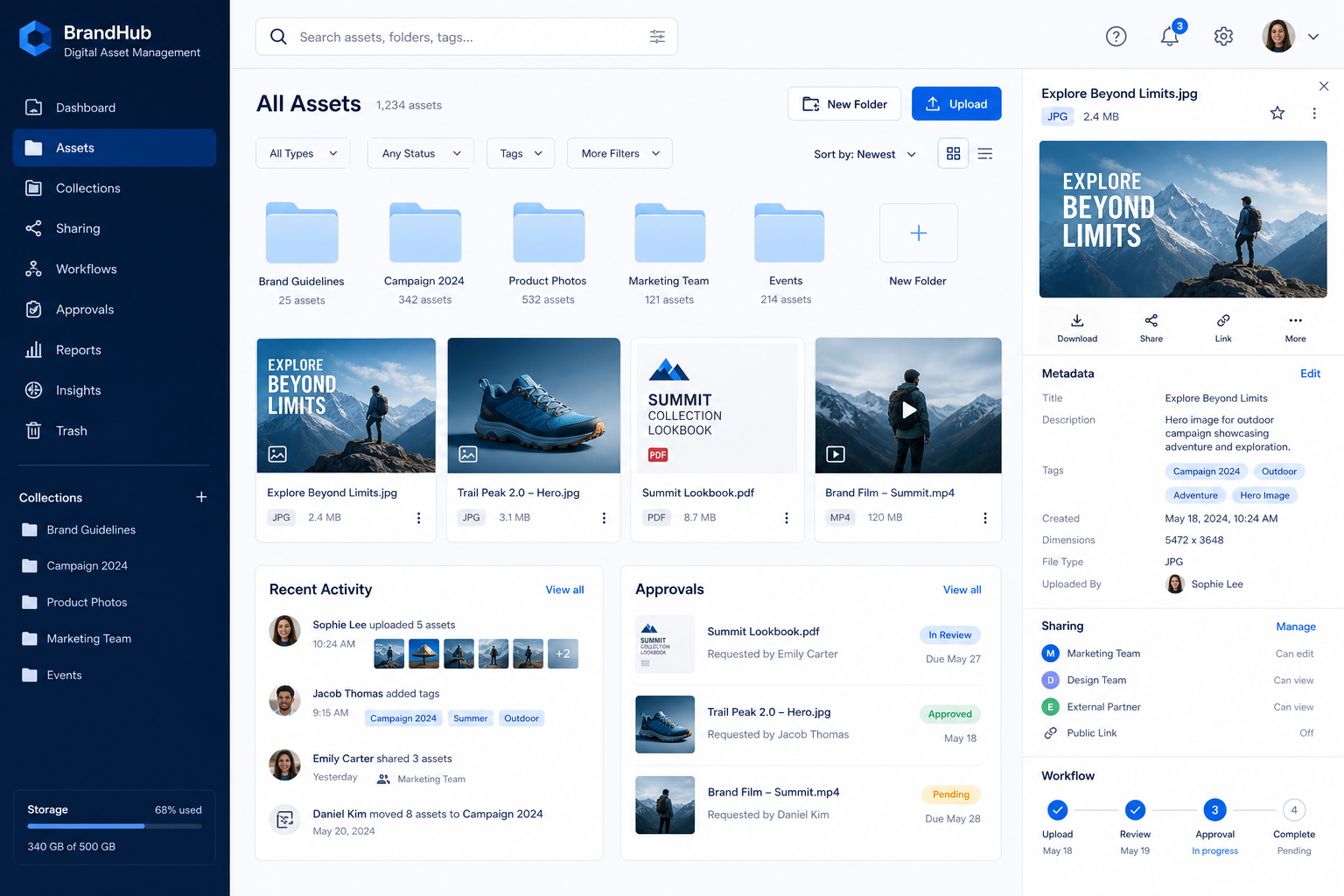
At its core, enterprise digital asset management software is a centralized platform for managing a company’s digital files across their full lifecycle. That includes:
- upload and ingestion
- folder and taxonomy structure
- metadata and tagging
- version control
- internal and external sharing
- permissions and access governance
- approval workflows
- archival or expiration management
In an enterprise setting, this system must work across large teams, multiple departments, and often multiple regions. Marketing may need campaign assets. Sales may need approved presentations. Product teams may need technical documents. Legal may need access-controlled files with audit visibility. External agencies may need limited access to brand-approved assets.
A strong enterprise digital asset management system keeps all of those moving parts organized without letting governance break usability.
Common Asset Types Managed in Enterprise DAM
Asset Type | Typical Use |
|---|---|
Images | Campaigns, ecommerce, brand libraries, social media |
Documents | Sales collateral, contracts, product sheets, policies |
Videos | Product demos, ads, training materials, event content |
Design files | Creative source files, templates, brand materials |
Presentations | Sales decks, investor materials, internal training |
Technical files | Manuals, product documentation, diagrams |
Why Enterprises Need a DAM System
As organizations grow, file chaos becomes a business problem. Teams waste time searching, recreating, re-approving, and re-sharing content that should already be accessible.
"73% of creative teams reported enhanced asset discoverability with DAM." - Source
That one benefit alone has a major effect on team efficiency. But searchability is just the beginning.
The Main Problems Enterprise DAM Solves
1. Scattered files across too many tools
Assets live in cloud drives, email threads, local folders, messaging apps, and agency systems. Teams stop trusting where the latest version lives.
2. Slow retrieval
When employees cannot quickly find approved content, they either interrupt other teams or create duplicate work.
3. Weak governance
Without permissions, expiration controls, and clear ownership, the wrong people access the wrong files or use outdated assets.
4. Brand inconsistency
Different regions or departments may use old logos, outdated product imagery, or unapproved messaging.
5. Risky external sharing
Sending files by attachment or open links creates security and compliance exposure.
6. Poor scalability
What works for 10 people breaks at 100, and what works for 100 often breaks at 1,000 without a structured system.
Enterprise DAM vs Basic File Storage
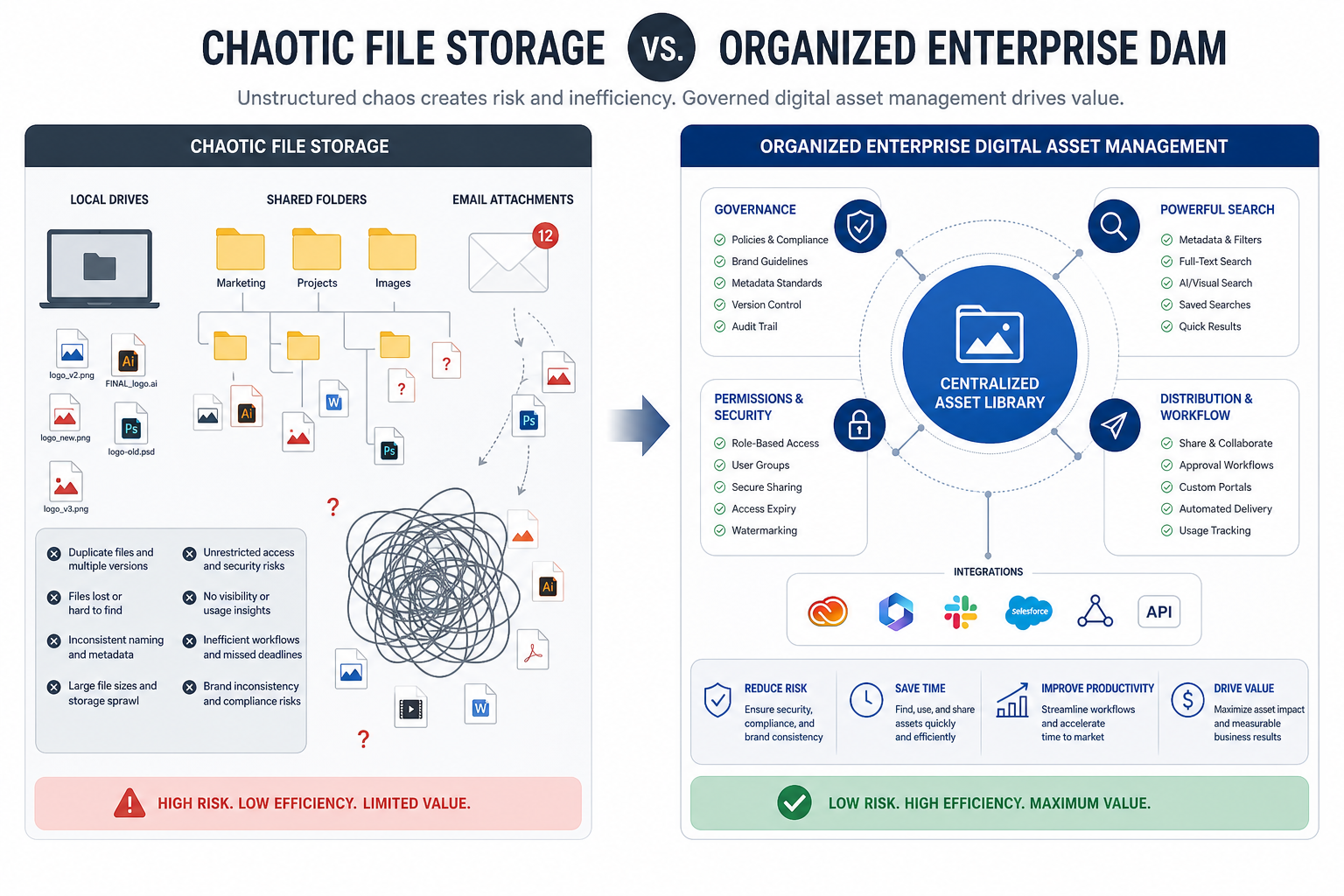
Not all file platforms are digital asset management systems. Basic storage tools hold files. DAM platforms make files manageable, usable, and governed.
Capability | Basic File Storage | Enterprise Digital Asset Management Software |
|---|---|---|
Central storage | Yes | Yes |
Folder organization | Yes | Yes |
Metadata and tagging | Limited | Advanced |
Version control | Limited | Strong |
Image previews | Sometimes | Usually |
Secure external sharing | Basic | Granular |
Expiring links | Sometimes | Common |
Access governance | Basic | Detailed |
Content approval workflows | Rare | Common |
Rights and usage control | Rare | Common |
Enterprise reporting | Limited | Strong |
Cross-team scalability | Limited | Designed for it |
This is why so many organizations outgrow generic storage. A growing company needs more than a place to dump files. It needs a controlled system for operational content.
What an Enterprise Digital Asset Management System Should Do
The best enterprise digital asset management system does more than centralize assets. It improves how content moves through the business.
Organize Assets Clearly
Folders, categories, tags, naming standards, and previews should work together so users can browse or search naturally. Complicated structures often fail because no one wants to use them.
AssetHQ stands out here by focusing on simple and intuitive file management. Teams can organize documents, images, and shared files in a structure that feels familiar, which increases adoption and reduces training friction.
Support Secure Sharing
Enterprise teams constantly share files with clients, partners, agencies, and vendors. That sharing should be controlled, trackable, and revocable.
Key features include:
- expiring links
- password-protected access
- user permissions
- role-based visibility
- controlled download access
AssetHQ makes secure file sharing practical with access control and expiring links, giving teams a more dependable alternative to sending assets around by email.
Improve Speed of Access
A DAM platform should reduce wait time, not create it. Fast upload performance, strong preview support, and quick file access are critical for adoption.
This is one area many heavy enterprise systems underdeliver. If the system is powerful but slow, teams work around it. AssetHQ emphasizes fast upload and file access so the platform supports daily work instead of interrupting it.
Enable Team Collaboration
A DAM platform should help teams work together across departments and locations. That includes:
- shared access
- permission-based collaboration
- common asset libraries
- clean handoffs between teams
- reduced duplication
For growing organizations, collaboration needs to be easy enough for non-technical teams to use confidently. AssetHQ is built with that simplicity in mind.
How Enterprise DAM Improves Workflow Efficiency
Enterprise content operations slow down when assets disappear between creation, approval, storage, and distribution. A DAM system connects those steps.
A Typical Enterprise DAM Workflow
- Content is uploaded to a central library
- Files are organized into folders and tagged
- Teams review and approve the correct versions
- Permissions determine who can access what
- Approved assets are shared internally or externally
- Files remain searchable for reuse later
- Expired or outdated assets are archived or restricted
Instead of asking, “Who has the latest file?” teams work from a trusted system.
"77% of organizations noted improved brand consistency post-adoption." - Source
That improvement happens because the DAM becomes the source of truth.
Key Features to Look for in Enterprise Digital Asset Management Software
Competitor content usually covers metadata, search, permissions, and integrations. Those are important, but many articles gloss over something equally important: usability. The system only works if real teams actually use it.
1. Intuitive Organization
An enterprise system should not require a specialist for everyday tasks. Folder structures, image previews, and clean navigation matter more than vendors sometimes admit.
AssetHQ is designed around this exact need, giving teams a straightforward way to manage files without fighting the interface.
2. Enterprise-Grade Security
Look for:
- secure storage
- encrypted access
- role-based permissions
- controlled sharing
- access limitations by user or team
- administrative oversight
Security is not optional in enterprise digital asset management software. But it should not make the user experience painful.
3. Search and Discoverability
Good search combines structured organization with metadata and previews. Teams should be able to search by:
- keyword
- folder
- file name
- asset type
- project or campaign
- version or date
4. Scalable Collaboration
As your team grows, collaboration must remain organized. That includes internal departments and external partners.
5. Version Control and File Reliability
Teams need confidence that they are using the latest approved file. Without that, brand and compliance issues multiply.
6. Controlled External Sharing
Enterprises regularly distribute files outside the business. This is where secure sharing links and access control become essential.
7. Speed and Performance
Fast uploads, fast loading, and fast retrieval are not luxuries. They directly affect daily adoption.
8. Predictable Pricing
Many enterprise systems become hard to budget because pricing is tied to modules, user tiers, storage complexity, or implementation layers. AssetHQ’s flat, transparent pricing is a meaningful differentiator for organizations that want scalability without hidden cost surprises.
What Large Teams Should Evaluate Before Choosing a DAM
The right enterprise digital asset management solution depends on how your business actually works, not just what the product demo highlights.
Ask These Evaluation Questions
Evaluation Area | What to Ask |
|---|---|
Adoption | Will non-technical teams actually use this every day? |
Structure | Can we organize files in a way that matches our business? |
Security | Can we control access internally and externally with confidence? |
Sharing | Can we share files securely without losing control afterward? |
Performance | Is the platform fast enough for frequent use? |
Scalability | Will it still work well as users, teams, and files grow? |
Cost | Is pricing clear, affordable, and sustainable over time? |
Administration | How much effort is required to manage the system? |
This is where AssetHQ is especially compelling for businesses that want enterprise-level dependability without a long implementation cycle or an overly technical setup.
Enterprise DAM Software for Different Teams
A good DAM system supports multiple departments, each with different needs.
Marketing Teams
Need campaign assets, brand consistency, fast search, and easy sharing.
Creative Teams
Need image previews, organized libraries, version confidence, and reliable access.
Sales Teams
Need the latest approved decks, documents, and visuals without hunting through folders.
Operations Teams
Need structure, permissions, and consistent access to internal files.
Leadership and Admin Teams
Need governance, cost predictability, and visibility into how content is organized and used.
AssetHQ fits naturally across these use cases because it focuses on organized storage for documents, images, and files, with collaboration and secure sharing built in.
What Competitor Articles Often Miss
Many DAM articles explain what DAM is, list popular vendors, and mention search, metadata, and workflows. But they often miss practical buying guidance for businesses that need enterprise discipline without enterprise complexity.
Here are the most common gaps:
They overemphasize feature volume
More features do not automatically mean better outcomes. If the platform is hard to adopt, teams create workarounds.
They underplay cost friction
A system may look strong on paper but become too expensive once storage, seats, onboarding, and add-ons are included.
They ignore speed as a usability factor
If upload and retrieval are slow, the platform loses trust.
They treat “enterprise” as “complex by default”
In reality, many companies want enterprise-grade security and governance with a cleaner, more approachable experience.
This is why AssetHQ occupies an important position in the market. It offers secure, scalable digital asset management and file storage with less friction, fewer hidden costs, and a more intuitive experience.
Examples of Enterprise DAM Vendors in the Market
Below are two well-known players often discussed in competitor coverage.
CELUM
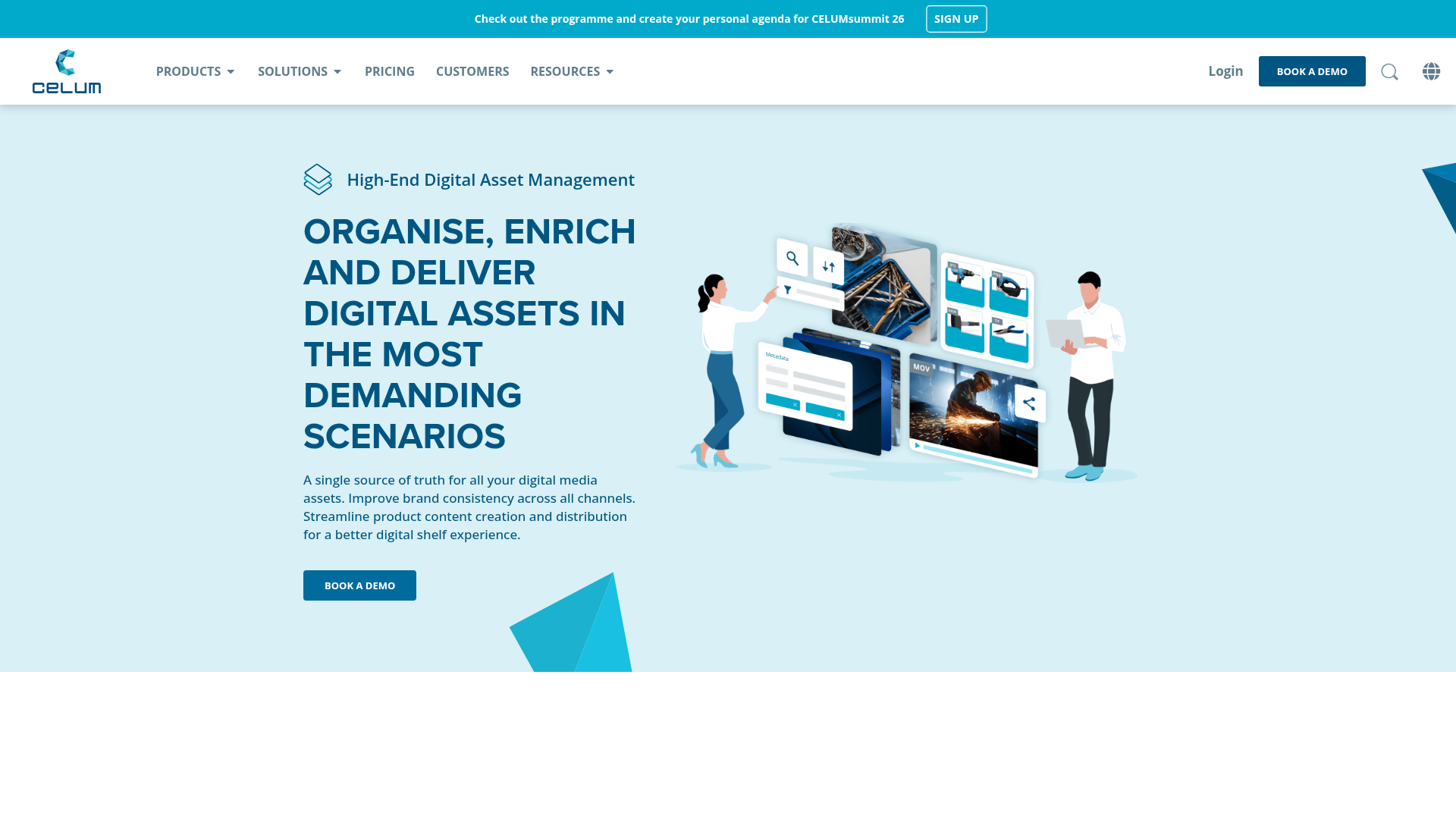
CELUM positions itself as a high-end DAM for demanding enterprise scenarios, particularly in retail and manufacturing. It emphasizes workflows, portals, content templates, and integrations.
Adobe Experience Manager Assets
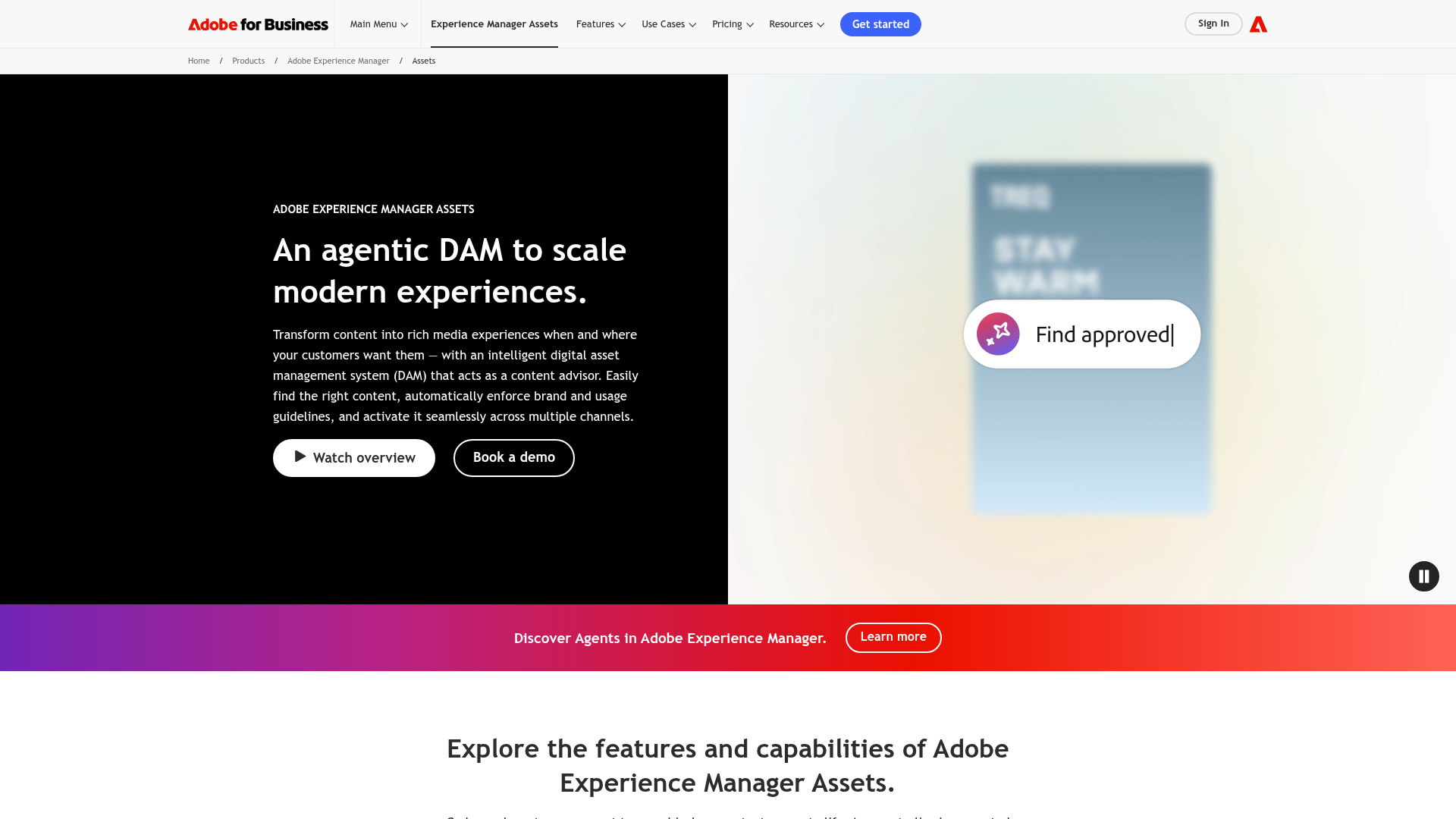
Adobe Experience Manager Assets is widely known in enterprise DAM conversations for strong integrations, asset governance, workflow support, and content operations at scale.
These platforms can be powerful, but many businesses evaluating enterprise digital asset management software should also ask a more grounded question: do we need a heavyweight suite, or do we need a dependable, scalable platform our team will actually use?
That is where AssetHQ becomes a serious option.
Why Simplicity Is a Competitive Advantage in Enterprise DAM
The assumption that enterprise software must be complicated is outdated. Complexity often creates adoption problems, administrative overhead, and higher total cost.
Simplicity in enterprise digital asset management software means:
- faster onboarding
- less employee training
- fewer support tickets
- better everyday usage
- more consistent file organization
- easier external sharing
- lower operational drag
AssetHQ is built around that philosophy. It combines:
- simple and intuitive file management
- secure file sharing with expiring links and access control
- organized storage for documents, images, and files
- image preview and management capabilities
- team collaboration for growing organizations
- enterprise-grade secure storage
- fast upload and file access
- affordable flat pricing with no hidden fees
- scalability for solo users, startups, and teams
That combination is especially valuable for companies that need professional-grade file management without committing to a massive enterprise stack before they truly need it.
How to Know If AssetHQ Is the Right Fit
AssetHQ is a strong fit if your business wants:
- a centralized place for business-critical files
- easier organization across folders and teams
- secure sharing for internal and external users
- better image and file visibility
- simple collaboration without technical overhead
- scalable storage and management
- predictable, affordable pricing
It is especially relevant for startups, small businesses, founders, and growing teams that want to move beyond generic file storage and into a more structured digital asset management approach.
For these organizations, AssetHQ offers a practical bridge between simple storage and enterprise-ready control.
Final Verdict
Enterprise digital asset management software should help large teams organize, govern, and distribute content with confidence. But the right platform is not just about enterprise checkboxes. It is about making content easier to find, safer to share, and simpler to manage at scale.
If your organization is tired of scattered files, unclear permissions, slow retrieval, and expensive tool sprawl, a better system is possible.
AssetHQ brings together the essentials modern businesses actually need: secure storage, intuitive organization, image and document management, controlled sharing, collaboration, speed, and predictable pricing. It delivers the discipline of a real digital asset management system without the burden of unnecessary complexity.
If you want enterprise digital asset management software that is practical, scalable, and refreshingly straightforward, AssetHQ is worth a closer look.
Related Posts

Brand Asset Management Software for Growing Teams
Discover brand asset management software for growing teams and learn how to organize files, share securely, and scale with ease.
min read
Cloud Based Digital Asset Management Benefits
Explore cloud based digital asset management benefits for secure file sharing, simpler teamwork, and organized growth. Try it today now
min read
File Sharing and Storage Made Simple for Teams
Discover file sharing and storage made simple for teams with secure access, better organization, and faster collaboration. Try AssetHQ!
min read