Secure Online File Sharing for Modern Teams
Secure Online File Sharing for Modern Teams Modern teams do not just need a place to upload files. They need a secure, reliable way to store, organize, preview, share, and control access to documents, images, and working files without slowing everyone down. That is where many businesses get stuck. Email attachments create duplicate versions. Consumer-grade tools make public file sharing too easy. Enterprise-heavy platforms often bury simple tasks under admin complexity and unpredictable pricin
Secure Online File Sharing for Modern Teams
Modern teams do not just need a place to upload files. They need a secure, reliable way to store, organize, preview, share, and control access to documents, images, and working files without slowing everyone down.
That is where many businesses get stuck. Email attachments create duplicate versions. Consumer-grade tools make public file sharing too easy. Enterprise-heavy platforms often bury simple tasks under admin complexity and unpredictable pricing. For solo founders, startups, small businesses, and growing teams, the challenge is finding secure online file sharing that feels easy to use every day.
AssetHQ is built for exactly that gap. It combines secure file storage, intuitive organization, image-friendly asset management, team collaboration, and controlled sharing in one simple workspace. You get the essentials modern teams actually need: fast upload and access, structured folders, previews for visual assets, expiring links, permission control, and scalable storage that does not feel bloated.
"Nearly 60% of organizations experienced data loss or exfiltration caused by an employee mistake on email in the last 12 months." - Security Magazine
"Only 30% of enterprises utilized cloud services with end-to-end encryption for external file sharing." - Help Net Security
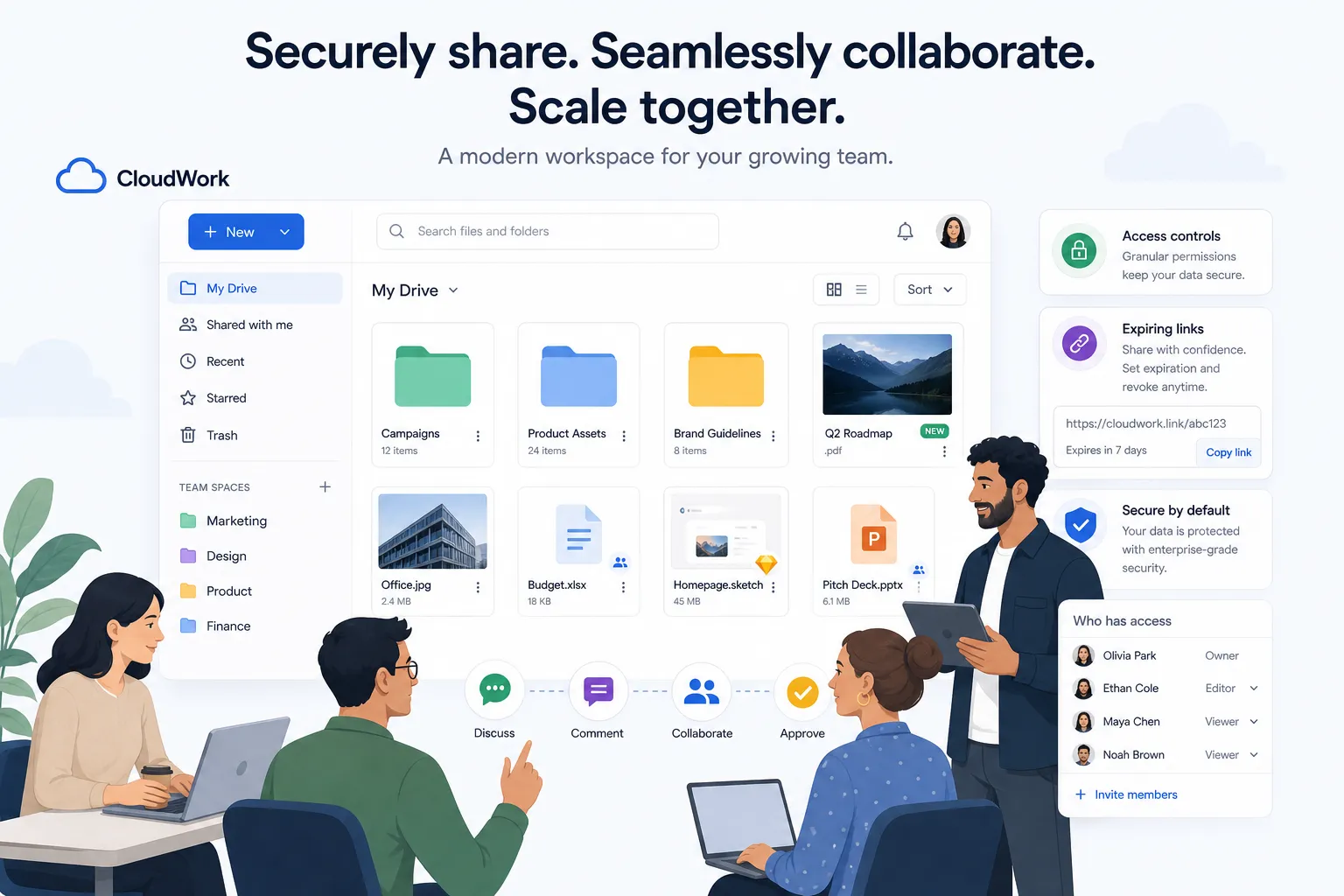
What modern teams actually need from file sharing
Most articles about file sharing software focus on storage limits, brand names, or vague claims about security. What they often gloss over is the daily experience of teams that need to move quickly without losing control.
A practical file sharing and collaboration platform should help you:
- keep files organized in a structure your team understands
- avoid duplicate versions and attachment chaos
- securely share files with clients, contractors, and partners
- preview images and documents without extra downloading
- control who can view, edit, or access content
- remove access when a project ends
- scale from one founder to a larger team without migrating systems
For growing organizations, secure file sharing is not just about encryption. It is also about clarity. If people cannot instantly find the right file, confirm the latest version, or safely send it to the right person, the system fails no matter how strong the infrastructure is.
Where competitor advice gets it right - and where it falls short
After reviewing leading content on business file sharing, several common themes appear again and again:
What most competitor articles cover well
They generally agree that the best file sharing tools should include:
- strong security controls
- cloud access from anywhere
- collaboration features
- integrations with other business apps
- external sharing options for clients and vendors
That part is useful and correct.
The content gaps they often miss
However, most competitor articles leave out the details that matter to smaller and growing teams:
- They rarely address usability as a security feature.
If a platform is confusing, users bypass it. Simpler file share management software often creates better real-world security because people actually use it correctly. - They underplay visual asset workflows.
Teams working with images, screenshots, brand files, PDFs, and presentations need preview-friendly organization, not just raw storage. - They focus on enterprise buyers only.
Many businesses need secure file sharing services without enterprise procurement overhead, custom consulting, or bloated admin panels. - They treat sharing as separate from storage.
In reality, the best way to share files with clients starts with how those files are organized and managed internally. - They mention permissions, but not link lifecycle.
Expiring links, controlled access, and easy revocation matter just as much as upload security.
AssetHQ fits especially well into these gaps. It offers enterprise-grade secure storage and controlled sharing, but in a product designed for speed, simplicity, and affordability.
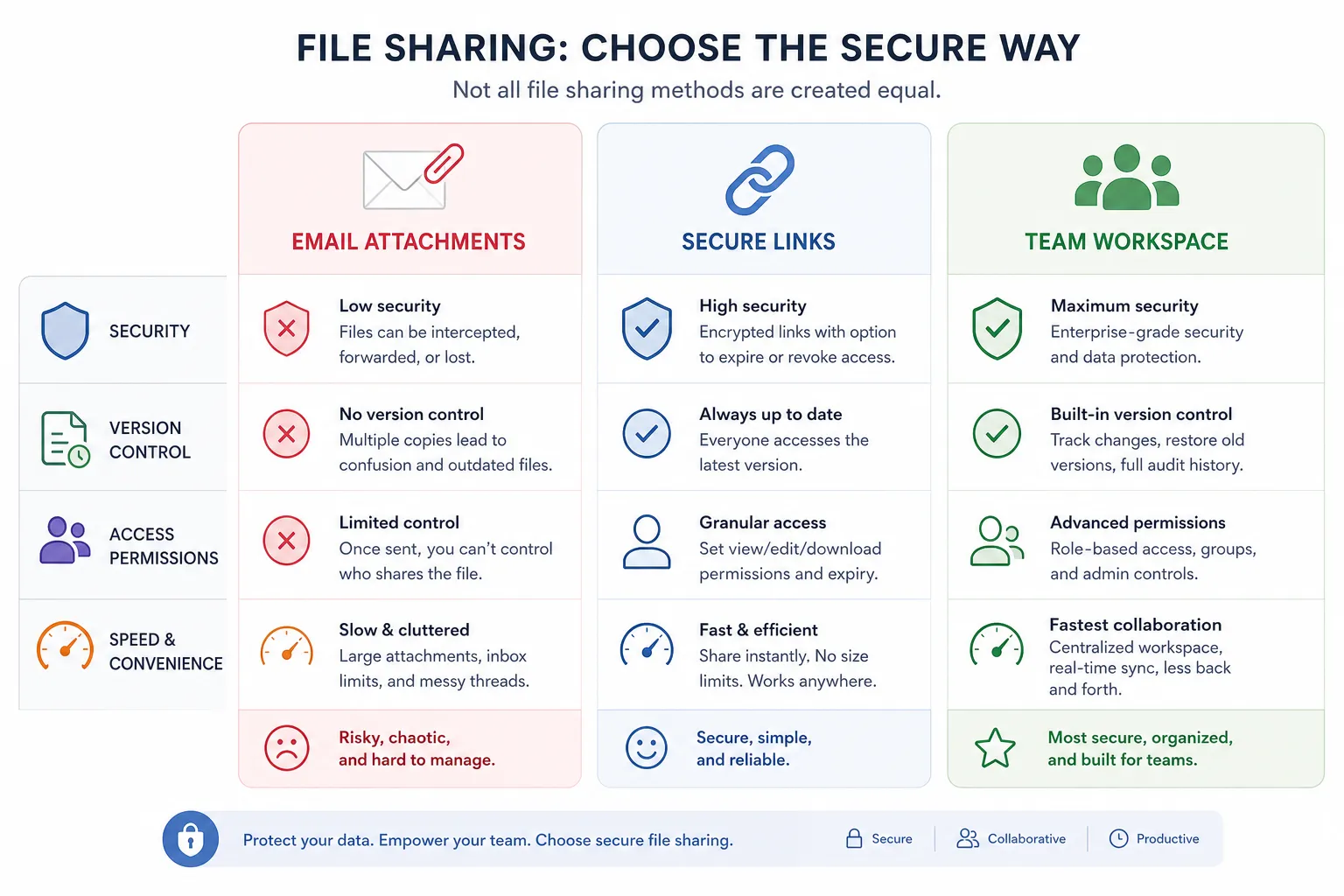
Why email attachments are no longer the safe default
Email still feels familiar, which is exactly why teams overuse it. But it is a poor fit for secure file collaboration.
Email creates uncontrolled copies
Every attachment becomes another version floating across inboxes, downloads, and forwarded threads. That makes it harder to know which file is current and nearly impossible to manage access after the fact.
Email does not scale with external collaboration
If you regularly handle file sharing with clients, agencies, or freelancers, attachments create friction fast. Large files bounce. Visual files get buried. Permissions are all-or-nothing. There is no clean activity trail.
Email is weak at ongoing control
Once a file is sent as an attachment, your control ends. Secure file sharing with clients should let you decide who can access a file, how long the link remains active, and when sharing should stop.
The core features that matter in secure file sharing software
Not all file sharing systems are built the same. If you are evaluating file sharing applications for business use, focus on the capabilities below.
1. Secure file storage and sharing in one place
Storage without sharing is incomplete. Sharing without organized storage becomes chaotic. A good system should let you store documents, images, and important files in a logical workspace, then securely share them without moving them elsewhere.
AssetHQ is especially strong here because it keeps organized storage and external sharing connected. Teams can manage digital assets and operational files in one place without adding unnecessary layers.
2. Access control that is simple to understand
Permission settings should not require a manual. You want clear control over who can access files and folders, whether internally or externally.
Look for:
- view or edit access options
- role-based access by team member
- folder-level structure
- revocable sharing
- limited external access when needed
3. Expiring links for safer external sharing
One of the most overlooked parts of protected file sharing is time-based access. Expiring links are essential when sharing proposals, contracts, campaign assets, or review materials with outside parties.
This is one of the easiest ways to reduce risk without adding friction for the recipient.
4. Fast upload and retrieval
Teams abandon slow systems. Fast file sharing is not just about network speed. It is about reducing the number of clicks between “I need this file” and “I found it.”
AssetHQ’s emphasis on fast upload and file access supports daily workflows for both solo users and teams.
5. Preview and management for visual files
If your business handles images, graphics, mockups, or product assets, previews matter. A folder full of vague filenames wastes time. Visual browsing improves both productivity and accuracy.
This is one reason many general file sharing apps feel incomplete for brand, marketing, operations, and content teams.
6. Collaboration without platform bloat
Many businesses do not need a heavyweight collaboration suite. They need a dependable place where people can access the right files, share them safely, and stay organized.
That is where a simpler file sharing and collaboration software approach often wins.
Secure file sharing with clients: what good looks like
Client sharing is one of the most common reasons businesses start looking for secure file share solutions. The ideal experience should feel polished for the client and controlled for your team.
A good client-sharing workflow should include
Need | Why it matters |
|---|---|
Clean folder structure | Clients find what they need faster |
Secure links | Prevents unnecessary exposure |
Expiration controls | Ends access after the project or review window |
Reliable performance | Reduces delays when sharing large files |
Easy updates | Keep the same source file current without resending attachments |
Permission clarity | Avoid accidental editing or oversharing |
The best way to share files with clients is usually not through public file sharing or generic transfer links. It is through a controlled, organized workspace where access is intentional and easy to manage.
For teams handling regular client deliverables, AssetHQ offers a more professional middle ground between basic consumer tools and overbuilt enterprise platforms.
Public links vs private file sharing
This distinction matters more than many buyers realize.
Public file sharing
Public sharing usually means anyone with the link can access the file. This can be useful for broad distribution, but it introduces obvious risks if the link is forwarded or indexed in the wrong context.
Private file sharing
Private file sharing limits access to intended recipients or approved users. This is the better choice for contracts, design drafts, client deliverables, product documentation, internal reports, and any file with business value.
Which is safer?
Private sharing is safer by default. Public options should be used sparingly and deliberately.
A lot of teams accidentally create public file sharing situations because their tools prioritize convenience over governance. AssetHQ’s approach to secure sharing, access control, and organized storage helps reduce that risk.
What to look for in file sharing software for business
If you are comparing file sharing services, the decision should not come down to brand familiarity alone. Use the criteria below.
Evaluation checklist
Feature | Why it matters for business teams |
|---|---|
Organized folder structure | Keeps content discoverable and scalable |
Secure file storage | Protects documents, media, and operational files |
External sharing controls | Supports safe client and partner collaboration |
Expiring links | Reduces ongoing exposure |
Image previews | Speeds up visual asset workflows |
Team permissions | Helps avoid oversharing internally |
Fast access | Keeps work moving |
Transparent pricing | Prevents cost surprises as usage grows |
Simplicity | Improves adoption and reduces workarounds |
Many businesses start out thinking they need a file sharing server or a large enterprise document suite. In practice, what they often need is a simpler, cloud-based platform that gives them secure file storage and sharing without the management burden.
That is exactly where AssetHQ stands out: simple enough for lean teams, robust enough for serious professional use.
AssetHQ vs bloated platforms: a better fit for growing teams
The biggest buying mistake smaller teams make is choosing software designed for a completely different organization size.
When enterprise-heavy tools become a problem
Some platforms are powerful, but they assume:
- dedicated admins
- formal governance teams
- broad internal training
- complex IT environments
- tolerance for a steeper learning curve
That may be appropriate for large enterprises. It is often excessive for startups, agencies, consultancies, founder-led businesses, and growing teams that need to move quickly.
Where AssetHQ fits better
AssetHQ offers a more practical alternative by focusing on:
- simple and intuitive file management
- secure file storage and sharing
- image preview and asset-friendly organization
- team collaboration without clutter
- enterprise-grade security in an easier product
- fast upload and file retrieval
- affordable flat pricing with no hidden fees
- scalability from solo use to multi-user teams
In other words, it is built for companies that want professional file sharing and collaboration without buying a platform that feels like an internal IT project.
How leading platforms position themselves
There are strong players in the market, and each tends to serve a different type of buyer.
Slack
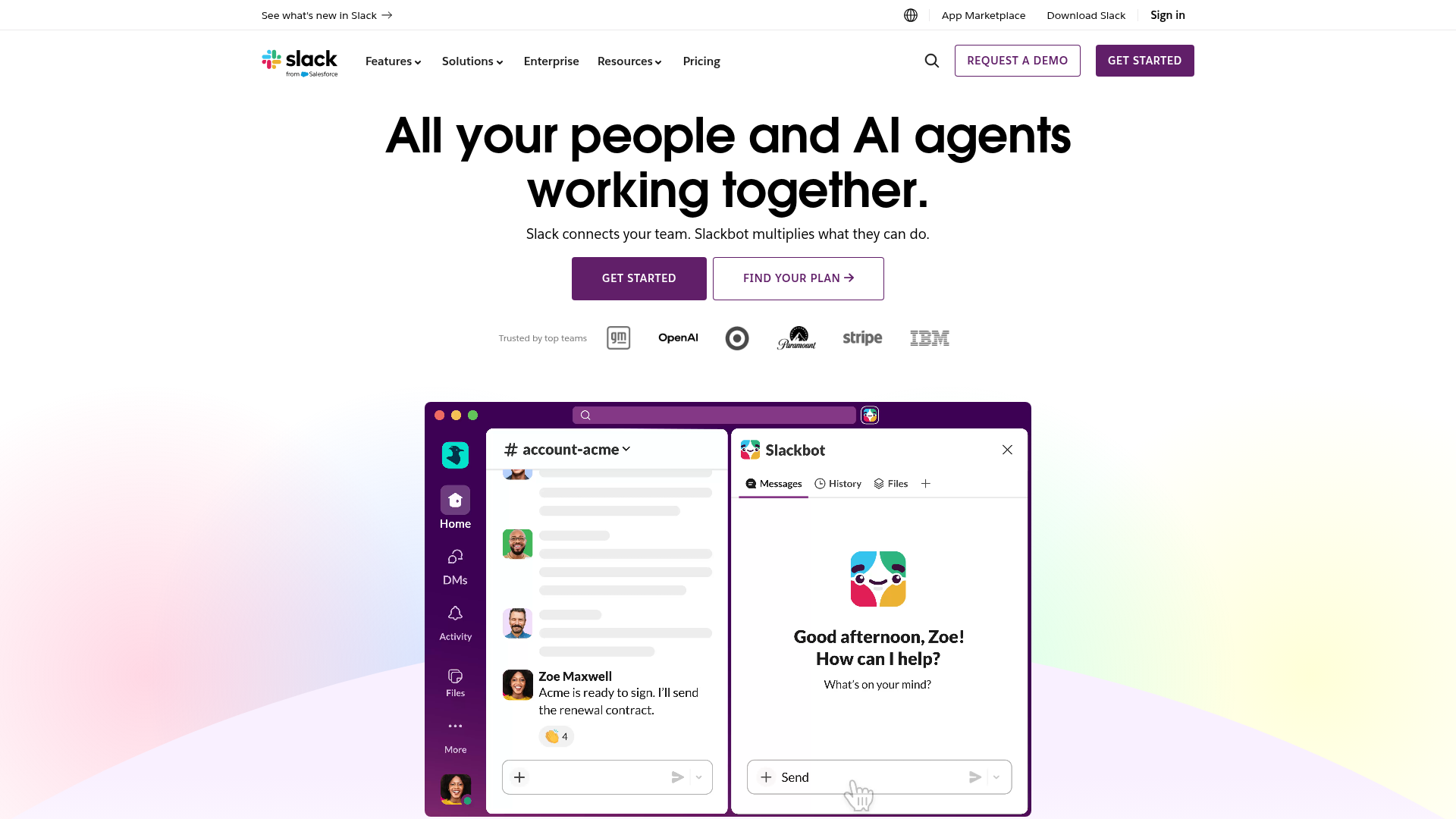
Slack is excellent for communication-centric workflows and integrates with major storage providers. It is useful when file sharing happens inside conversations. But it is not primarily a dedicated digital asset management or file organization platform.
Dropbox
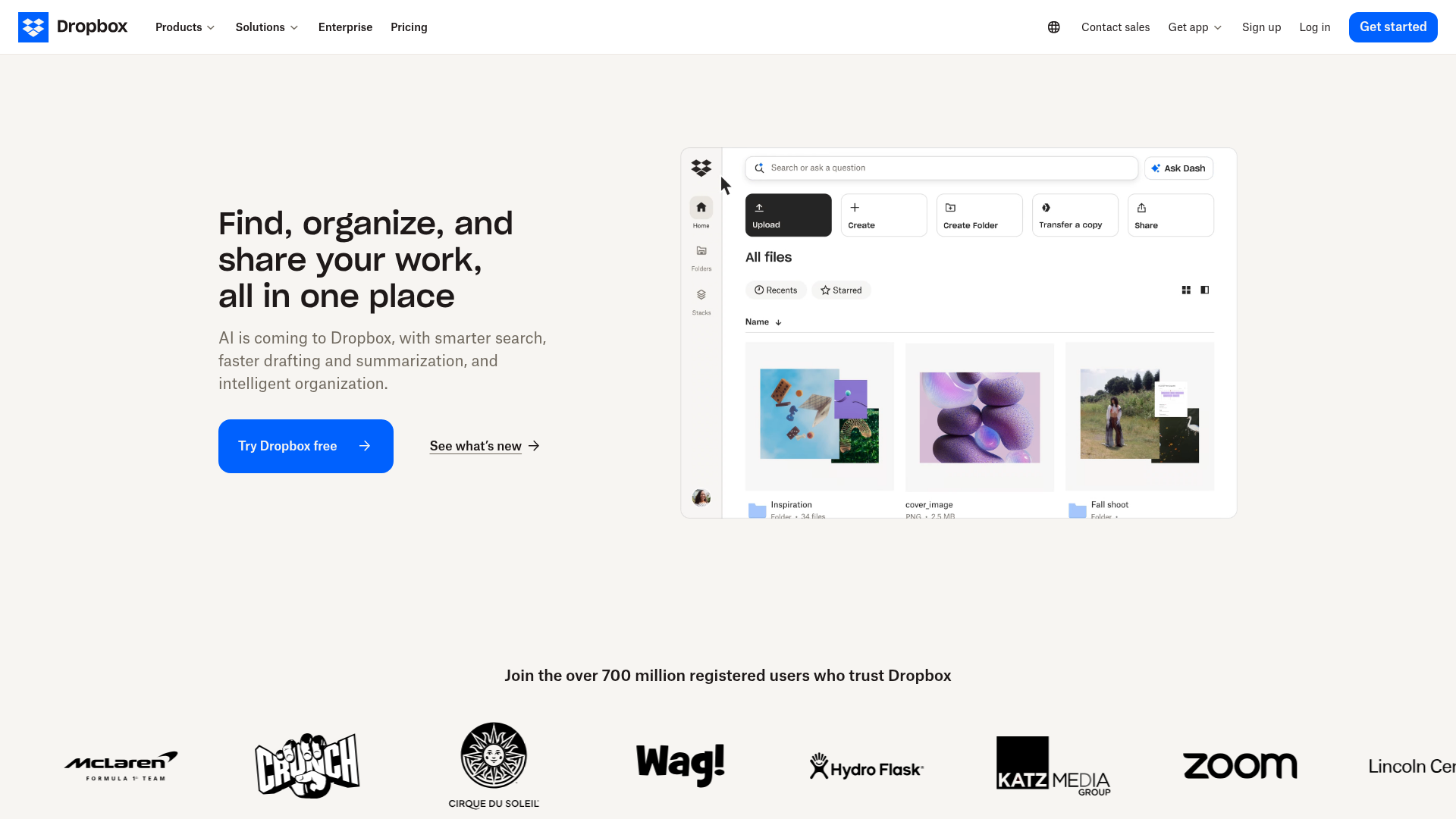
Dropbox is widely known for cloud storage and file sharing. It works well for general-purpose syncing and sharing, though teams with more structured asset workflows may want stronger organization and management clarity.
Box
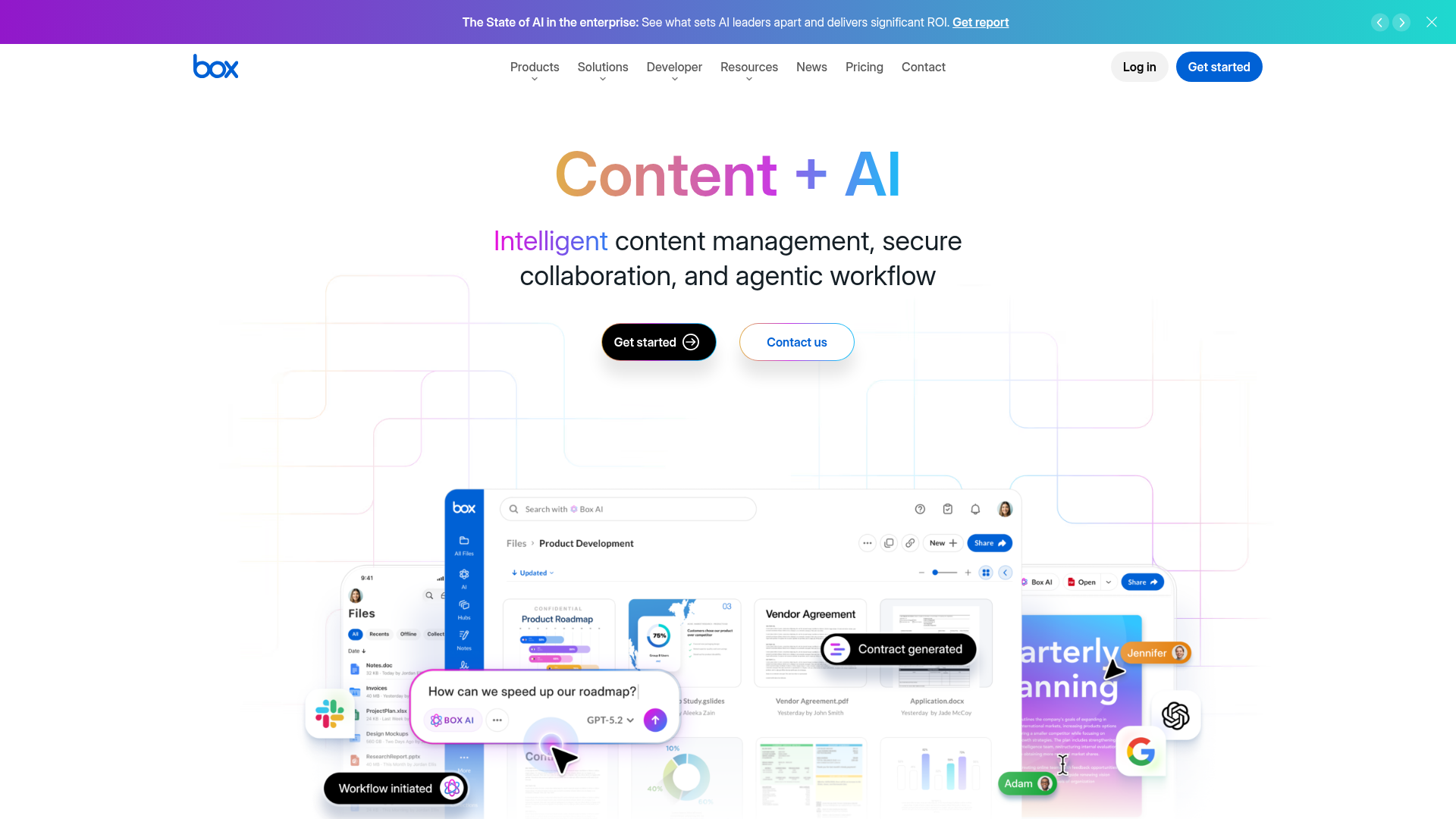
Box is often favored by larger organizations with stricter compliance needs. It is feature-rich, but that depth can also make it feel more complex than necessary for smaller teams.
What these comparisons reveal
The market does not just divide into “good” and “bad” tools. It divides by workflow fit.
If you need a platform centered on clean digital asset organization, secure sharing, image management, and straightforward team access, AssetHQ occupies a valuable position that many broad-purpose tools do not fully address.
The hidden security issue: poor organization
A major gap in competitor content is the connection between organization and security.
Teams often think of security as passwords, encryption, or policy settings. Those matter. But disorganized content creates its own form of risk.
How poor organization leads to oversharing
When files are messy, users tend to:
- send entire folders instead of one file
- share the wrong version
- expose extra documents accidentally
- rely on public links for convenience
- duplicate files across tools to “be safe”
That is why secure file collaboration starts with a workspace people can actually understand.
AssetHQ’s intuitive folder structure and visual asset management reduce this risk in a simple way: by making the right file easier to find, review, and share correctly.
A smarter framework for choosing file sharing solutions
Instead of asking “Which file sharing company is most popular?” ask these five better questions.
1. Is it easy enough that people will use it properly?
The safest platform is not always the one with the longest feature list. It is the one your team will actually adopt.
2. Can it support both internal and external workflows?
Many tools handle one well and the other awkwardly. Modern teams need both.
3. Does it help us stay organized as we grow?
A file sharing system that works for 500 files may break at 50,000 if the structure is poor.
4. Can we share professionally with clients?
Client-facing sharing should feel secure, polished, and easy.
5. Will pricing stay predictable?
Affordable flat pricing matters, especially for growing teams watching every software decision.
AssetHQ scores particularly well against this framework because it balances professional-grade capability with day-to-day simplicity.
Who should choose AssetHQ
AssetHQ is a strong fit for:
- solo founders managing documents, media, and business files
- startups that need secure file sharing without enterprise complexity
- agencies sharing assets and approvals with clients
- growing teams that need collaborative storage and access control
- operations, marketing, and content teams managing mixed file types
- businesses that want a scalable DAM-style solution without bloat
It is especially compelling if your current tools feel fragmented: one place for storage, another for transfer links, another for image review, and a fourth for team access. Consolidating those workflows can save time while improving control.
Final verdict
Secure file sharing is no longer just about moving files from one person to another. The real goal is to store, organize, preview, manage, and share business-critical assets in a way that is safe, fast, and easy to maintain.
That is where many traditional file sharing programs fall short. They either oversimplify security or overcomplicate everyday use.
AssetHQ offers a better path for modern teams. It combines secure file storage, access control, expiring links, intuitive organization, image preview support, and scalable collaboration in one straightforward platform. For solo users, startups, and growing organizations that want dependable file sharing software for business without the cost and complexity of enterprise-heavy systems, it is a smart fit.
If you want secure online file sharing that your team will actually enjoy using, AssetHQ is worth a serious look. It gives you the control of a professional system with the clarity and affordability growing businesses need.
Related Posts
Dropbox Shared Link Dl 0 Explained
Learn what Dropbox shared link dl 0 means, how to verify link safety, open files correctly, and share smarter with confidence today
min read
Cloud Storage and File Sharing: Best Free Options
Discover cloud storage and file sharing tools to compare free options for links, large transfers, and team use. Find your best fit now.
min read
End to End Encrypted File Sharing Benefits
Discover end to end encrypted file sharing benefits, use cases, and security tips for modern teams, then choose the right tool now.
min read